
Meeting the 2030 Goals of Global Retailers
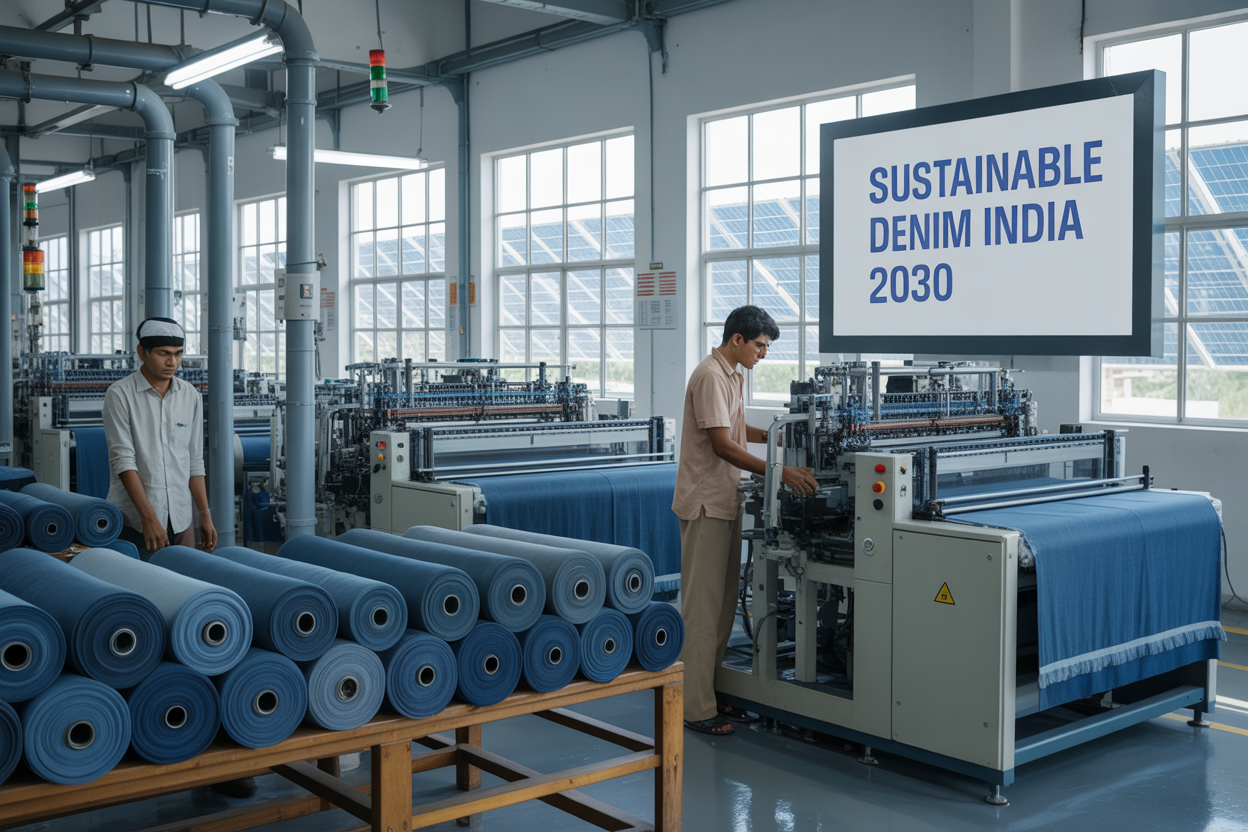
Global fashion brands face mounting pressure to meet ambitious 2030 sustainability targets, and India’s massive denim industry holds the key to success. This guide is designed for sustainability managers, procurement professionals, and supply chain executives at international retailers who need to understand how sustainable denim manufacturing India can help achieve their environmental commitments.
Indian textile industry sustainability has reached a turning point. The country’s garment manufacturers are rolling out cutting-edge technologies and green initiatives that directly address global retailer 2030 sustainability goals. From water recycling systems to organic cotton sourcing, these changes are reshaping how the world thinks about eco-friendly denim production.
We’ll explore how India’s strategic advantages in denim manufacturing are creating new opportunities for sustainable fashion supply chain India partnerships. You’ll discover the innovative technologies that are reducing denim manufacturing environmental impact while maintaining competitive pricing and quality standards.
We’ll also break down the specific sustainability requirements major retailers are setting for 2030 and show you how Indian manufacturers are positioning themselves to meet these demands through measurable environmental improvements and strategic collaborations.
India’s Strategic Position in Global Denim Manufacturing

Market Share and Production Capacity Advantages
India has become a powerhouse in global denim manufacturing, holding approximately 18% of the world’s denim export market. The country produces over 1.2 billion meters of denim fabric annually, making it the second-largest denim producer globally after China. This massive production capacity stems from India’s textile heritage, which spans centuries and has evolved into a sophisticated manufacturing ecosystem.
The Indian denim industry operates through more than 40 major manufacturing hubs, with states like Tamil Nadu, Karnataka, Gujarat, and Rajasthan leading production. These facilities can process everything from raw cotton to finished garments under one roof, giving Indian manufacturers unprecedented flexibility and speed-to-market advantages. Many facilities operate 24/7 with production lines capable of churning out 50,000 to 100,000 pieces per day.
What sets India apart is its ability to handle both mass production and specialized orders. While large-scale manufacturers serve global brands with millions of units, smaller specialized facilities cater to premium and sustainable denim manufacturing India requirements. This dual capability allows the country to capture market segments ranging from fast fashion to luxury sustainable fashion supply chain India operations.
Cost-effectiveness Compared to Traditional Manufacturing Hubs
Indian denim production offers compelling cost advantages over traditional manufacturing centers. Labor costs remain 40-60% lower than China and 70-80% lower than developed countries, while maintaining comparable quality standards. Raw material availability adds another cost benefit – India produces its own cotton, eliminating import duties and reducing transportation costs that burden other manufacturing hubs.
The cost structure becomes even more attractive when factoring in government incentives for textile exports and sustainable manufacturing practices. The Production Linked Incentive (PLI) scheme provides additional cost reductions for manufacturers meeting specific sustainability criteria, directly supporting eco-friendly denim production initiatives.
Energy costs in textile-focused industrial zones remain competitive due to dedicated power infrastructure and renewable energy adoption. Many facilities have achieved 20-30% cost reductions through solar power integration and energy-efficient machinery, making sustainable denim manufacturing India both environmentally and economically viable.
Established Supply Chain Infrastructure
India’s textile supply chain infrastructure represents decades of strategic development and investment. The country hosts complete vertical integration capabilities, from cotton cultivation and spinning to dyeing, weaving, and garment manufacturing. This comprehensive ecosystem eliminates dependency on external suppliers and reduces lead times significantly.
Transportation networks connect major manufacturing hubs to ports through dedicated freight corridors, ensuring efficient movement of raw materials and finished goods. The Golden Quadrilateral highway network and dedicated freight corridors have reduced transportation time by 30-40% over the past decade.
Digital supply chain platforms now connect thousands of suppliers, manufacturers, and logistics providers, creating transparency and efficiency that global retailers demand. Real-time tracking systems allow brands to monitor their orders from raw material procurement to final shipment, addressing the traceability requirements essential for retailer sustainability commitments denim programs.
Quality Standards and International Certifications
Indian denim manufacturers have invested heavily in achieving international quality certifications and sustainable manufacturing standards. Over 200 facilities hold certifications from organizations like OEKO-TEX, GOTS (Global Organic Textile Standard), and Cradle to Cradle Certified programs. These certifications validate both quality and environmental standards that align with global retailer 2030 sustainability goals.
Quality control systems in Indian facilities now match or exceed international standards. Many manufacturers employ Six Sigma methodologies and have achieved defect rates below 0.5%. Automated quality inspection systems using AI and machine learning technologies ensure consistent quality across large production runs.
Sustainability certifications have become particularly important, with facilities earning recognition for water conservation, chemical management, and energy efficiency. The Better Cotton Initiative (BCI) certification is now standard among leading manufacturers, while advanced facilities pursue certifications like LEED for their manufacturing facilities and Fair Trade for their labor practices.
These certifications aren’t just compliance requirements – they’ve become competitive advantages that help Indian manufacturers secure long-term contracts with sustainability-focused brands and support their Indian textile industry sustainability transformation goals.
Current Sustainability Challenges in Indian Denim Production

Water Consumption and Wastewater Management Issues
India’s denim manufacturing sector faces significant water-related challenges that directly impact sustainable denim manufacturing India operations. Traditional denim production requires approximately 1,800-2,000 liters of water per pair of jeans, with Indian facilities often exceeding these figures due to outdated infrastructure and processes. The dyeing and finishing stages consume the most water, particularly indigo dyeing which demands multiple wash cycles to achieve desired color depths.
Wastewater management presents an even more complex problem. Many Indian textile facilities discharge untreated or poorly treated effluent containing high levels of suspended solids, chemical oxygen demand (COD), and toxic substances. This creates environmental contamination in local water bodies, affecting both ecosystems and communities. Small and medium-sized manufacturers often lack proper effluent treatment plants (ETPs), while larger facilities may have inadequate treatment capacity for their production volumes.
The textile industry sustainability landscape shows that water recycling rates in Indian denim facilities average only 40-50%, compared to global best practices of 80-90%. This inefficiency stems from limited investment in closed-loop water systems and advanced filtration technologies.
Chemical Usage and Environmental Impact Concerns
Chemical-intensive processes define traditional denim manufacturing environmental impact, with Indian facilities using over 3,000 different chemicals throughout production cycles. Indigo dyeing relies heavily on synthetic chemicals including sodium hydrosulfite, caustic soda, and various reducing agents that create toxic byproducts. Stone washing, acid washing, and enzyme treatments add layers of chemical complexity.
Heavy metal contamination from chrome-based processes and azo dyes poses serious environmental risks. Many Indian manufacturers still use banned substances like certain azo dyes that release carcinogenic aromatic amines. The lack of comprehensive chemical inventory management systems makes tracking and controlling these substances challenging.
Air pollution from volatile organic compounds (VOCs) released during dyeing and finishing operations affects both worker health and environmental quality. Chemical storage and handling practices often fall short of international standards, creating risks of spills and contamination. The cumulative effect of these chemical practices undermines efforts toward eco-friendly denim production and creates barriers to meeting global retailer sustainability requirements.
Energy-Intensive Manufacturing Processes
Denim production demands substantial energy inputs, with Indian facilities typically consuming 15-20% more energy per unit than international benchmarks. Steam generation for dyeing processes accounts for 40-50% of total energy consumption, while mechanical processes like spinning, weaving, and finishing contribute additional energy demands.
Coal-based power generation dominates India’s energy mix, meaning denim manufacturing carries a significant carbon footprint. Most facilities lack energy-efficient equipment upgrades, operating with machinery that’s 15-20 years old and consumes excessive power. Heat recovery systems remain uncommon, leading to substantial energy waste during high-temperature processes.
Compressed air systems, essential for various textile operations, often operate inefficiently due to leakages and oversized equipment. Lighting and ventilation systems frequently use outdated technologies, contributing to overall energy inefficiency. The absence of comprehensive energy management systems prevents manufacturers from identifying optimization opportunities and tracking consumption patterns effectively.
Renewable energy adoption remains limited, with less than 10% of Indian denim manufacturers incorporating solar or wind power solutions. This energy dependency creates vulnerability to price fluctuations and regulatory changes while hindering progress toward sustainable fashion supply chain India objectives that global retailers increasingly demand.
Innovative Technologies Transforming Indian Denim Manufacturing

Water-saving dyeing and washing techniques
Indian denim manufacturers are revolutionizing their water usage through breakthrough technologies that slash consumption by up to 90%. Ozone washing systems now replace traditional stone washing, reducing water needs from 150 liters per garment to just 15 liters. These systems create the desired vintage effects while eliminating the environmental damage caused by pumice stones and excessive water usage.
Laser technology has become a game-changer in the finishing process. Instead of chemical treatments that require multiple rinse cycles, laser systems create precise fade patterns and distressing effects using concentrated light beams. This dry finishing method eliminates water usage entirely for certain design elements while reducing production time from hours to minutes.
Nano-bubble technology represents another major advancement in sustainable denim manufacturing India. These microscopic bubbles enhance the efficiency of dyeing processes, allowing manufacturers to achieve deeper, more consistent colors with 70% less water and 50% fewer chemicals. The technology also reduces energy consumption by lowering the required processing temperatures.
Air-dyeing systems have emerged as the most significant breakthrough in Indian textile industry sustainability. These innovative machines use pressurized air instead of water to move fabric through the dyeing process. Major Indian manufacturers report achieving identical color quality while reducing water consumption by 95% and eliminating the need for traditional drying processes.
Eco-friendly fiber alternatives and organic cotton integration
The shift toward sustainable textile technologies has prompted Indian manufacturers to diversify their fiber sources beyond conventional cotton. Recycled cotton fibers now comprise 30-40% of many denim blends, created from post-industrial waste and discarded garments. This circular approach reduces the demand for virgin cotton while maintaining the durability and comfort consumers expect.
Tencel and other wood-based fibers are gaining prominence in eco-friendly denim production. These materials require 95% less water to produce than conventional cotton and biodegrade completely at end-of-life. Indian manufacturers are mastering the art of blending these fibers with organic cotton to create jeans that feel softer while meeting global retailer 2030 sustainability goals.
Hemp integration has reached new levels of sophistication, with modern processing techniques eliminating the rough texture traditionally associated with hemp denim. Indian producers now create hemp-cotton blends that offer superior durability and antimicrobial properties while requiring minimal pesticides during cultivation.
| Fiber Type | Water Reduction | Chemical Reduction | Durability Increase |
|---|---|---|---|
| Organic Cotton | 91% | 62% | Standard |
| Hemp Blend | 76% | 85% | 40% |
| Recycled Cotton | 95% | 45% | Standard |
| Tencel Blend | 95% | 70% | 20% |
Renewable energy adoption in production facilities
Solar power installations across Indian denim facilities have reached unprecedented scales, with many manufacturers achieving complete energy independence during daylight hours. Major production hubs in Tamil Nadu and Karnataka now operate 500+ megawatt solar farms dedicated exclusively to textile manufacturing, reducing carbon emissions by 2.5 million tons annually.
Wind energy integration has become equally important, particularly in coastal manufacturing regions. Indian garment industry green initiatives now include hybrid renewable systems that combine solar and wind power to maintain 24/7 clean energy operations. These systems have reduced electricity costs by 60% while eliminating grid dependency during peak production periods.
Biogas generation from organic waste represents a closed-loop approach to energy production. Denim manufacturing facilities now convert cotton dust, fabric scraps, and cafeteria waste into methane gas that powers steam boilers and heating systems. This process eliminates 40% of organic waste while generating 15% of total energy requirements.
Energy storage systems using lithium-ion batteries ensure consistent power supply even during renewable energy fluctuations. These installations store excess solar energy during peak generation hours and release it during night shifts, maintaining production schedules without relying on fossil fuel backup generators.
Digital printing and laser finishing technologies
Digital printing has transformed pattern application in sustainable fashion supply chain India by eliminating traditional screen printing processes that require extensive water usage and chemical disposal. Modern digital systems apply intricate designs directly onto denim using water-based inks, reducing water consumption by 85% while enabling unlimited design complexity.
Laser finishing technology creates authentic-looking wear patterns without sandblasting or chemical treatments. These computer-controlled systems replicate decades of natural wear in minutes, producing consistent results across thousands of garments. The precision allows manufacturers to create signature looks for international brands while eliminating worker exposure to harmful silica dust.
Ozone finishing systems complement laser technology by providing chemical-free bleaching and softening effects. These machines use ozone gas to break down indigo dye molecules, creating vintage appearances without potassium permanganate or other harsh chemicals. The process reduces chemical usage by 100% for certain finishing effects while cutting processing time in half.
Plasma treatment technology represents the latest advancement in denim manufacturing environmental impact reduction. This process uses ionized gas to modify fiber surfaces, improving dye absorption and creating unique textures without water or chemicals. Plasma-treated denim requires 30% less dye while achieving superior color fastness and feel properties.
Global Retailers’ 2030 Sustainability Commitments and Requirements

Major fashion retailers worldwide have set ambitious carbon neutrality targets for 2030, fundamentally reshaping how they source sustainable denim manufacturing India. Companies like H&M, Zara, and Gap have committed to reducing their scope 3 emissions by 50% or more, directly impacting their supplier selection criteria. These global retailer 2030 sustainability goals require Indian manufacturers to demonstrate measurable progress in reducing their carbon footprint across all production phases.
Nike’s Move to Zero campaign exemplifies this shift, demanding suppliers cut emissions by 65% by 2030 while maintaining production quality. Similarly, Levi Strauss & Co. has mandated that 100% of their suppliers achieve science-based emissions reduction targets. For Indian denim producers, this means investing in renewable energy sources, optimizing water usage, and implementing energy-efficient manufacturing processes.
The Indian textile industry sustainability landscape now includes mandatory carbon auditing, with retailers requiring quarterly emissions reports from their supply chain partners. Companies that fail to meet these benchmarks risk losing lucrative contracts, creating strong economic incentives for sustainable transformation.
Circular economy mandates and waste elimination objectives
The circular fashion India movement has gained unprecedented momentum as retailers establish zero-waste mandates for their supply chains. Leading brands now require Indian manufacturers to demonstrate closed-loop production systems where textile waste gets recycled back into new products rather than ending up in landfills.
Adidas leads this charge with their commitment to using only recycled polyester by 2024, while Patagonia demands that suppliers implement take-back programs for worn garments. These sustainable fashion supply chain India requirements push manufacturers to redesign their production processes around waste minimization and material recovery.
| Retailer | Waste Reduction Target | Implementation Deadline |
|---|---|---|
| H&M | 100% recycled or sustainably sourced materials | 2030 |
| Zara | Zero textile waste to landfill | 2025 |
| Gap Inc. | 50% reduction in water usage | 2030 |
| Levi’s | 100% sustainable cotton sourcing | 2025 |
Indian denim manufacturers now partner with recycling facilities and invest in technologies that transform production scraps into new fibers. This shift requires significant capital investment but opens new revenue streams while meeting retailer demands.
Ethical sourcing and fair labor practice standards
Retailer sustainability commitments denim increasingly encompass comprehensive social responsibility requirements alongside environmental targets. Major brands now mandate living wage standards, gender equality metrics, and worker safety certifications from their Indian suppliers.
The Better Cotton Initiative, supported by over 2,000 retailers globally, requires Indian cotton farmers and processors to meet strict labor standards while reducing environmental impact. Similarly, the Fair Labor Association’s accreditation has become essential for manufacturers seeking long-term partnerships with
premium brands.
Walmart’s Project Gigaton demonstrates how sustainable textile technologies must align with ethical practices, requiring suppliers to improve working conditions while reducing emissions. Their Indian denim partners report annual progress on both fronts, with penalties for non-compliance potentially ending business relationships.
Modern auditing systems now track real-time data on worker hours, safety incidents, and wage payments, making it impossible for manufacturers to hide poor labor practices. Retailers increasingly prefer suppliers who proactively invest in worker welfare programs, creating competitive advantages for ethical manufacturers in India’s denim manufacturing environmental impact reduction efforts.
Strategic Partnerships Between Indian Manufacturers and International Brands

Long-term Sustainability Agreements and Collaborative Initiatives
Major international brands are forging decade-long partnerships with Indian denim manufacturers that go beyond traditional buyer-supplier relationships. Companies like H&M, Zara, and Levi’s have established comprehensive sustainability frameworks with their Indian partners, setting specific environmental targets for 2030. These agreements include mandatory water reduction benchmarks, renewable energy adoption timelines, and chemical usage restrictions.
The Better Cotton Initiative has become a cornerstone of these collaborations, with brands committing to source 100% sustainable cotton from Indian suppliers by 2030. Arvind Limited, one of India’s largest denim manufacturers, has signed multi-year contracts with global retailers that guarantee premium pricing for meeting stringent sustainability criteria. These partnerships provide financial security for manufacturers while ensuring brands can meet their global retailer 2030 sustainability goals.
Technology Transfer Programs and Knowledge Sharing
Leading sustainable denim manufacturing India initiatives now include sophisticated technology transfer programs where international brands share cutting-edge equipment and processes with their Indian partners. Gap Inc. has established a dedicated sustainability hub in Bangalore, providing Indian manufacturers access to advanced dyeing technologies that reduce water consumption by up to 70%.
Knowledge sharing platforms have emerged as game-changers in the Indian textile industry sustainability landscape. Swedish brand Nudie Jeans has created an open-source database of eco-friendly production techniques, freely available to their Indian manufacturing partners. This collaborative approach accelerates the adoption of sustainable textile technologies across the supply chain.
Training programs focus on:
-
Zero liquid discharge systems implementation
-
Organic and recycled fiber processing techniques
-
Energy-efficient production methodologies
-
Circular design principles for denim products
Investment in Green Infrastructure Development
International brands are co-investing billions of dollars in transforming India’s denim manufacturing infrastructure. IKEA and other major retailers have committed $2.5 billion toward renewable energy projects specifically for their Indian textile suppliers. Solar panel installations across manufacturing facilities in Tamil Nadu and Karnataka now power over 60% of sustainable fashion supply chain India operations.
Water treatment facilities represent another major investment area. Brands like Patagonia have partnered with Indian manufacturers to install state-of-the-art effluent treatment plants that not only meet local regulations but exceed European Union standards. These facilities process wastewater to levels suitable for agricultural irrigation, creating a circular fashion India model that benefits local communities.
| Investment Area | Funding Amount | Expected Completion |
|---|---|---|
| Renewable Energy | $2.5 billion | 2027 |
| Water Treatment | $800 million | 2026 |
| Waste Management | $450 million | 2028 |
Joint Research and Development Projects
Collaborative R&D initiatives are pushing the boundaries of eco-friendly denim production in India. The Indo-European Sustainable Textiles Research Consortium, established by brands including Adidas and Puma, focuses on developing biodegradable denim alternatives and closed-loop manufacturing processes.
Revolutionary projects include laser finishing technologies that eliminate sandblasting, ozone treatment systems replacing traditional washing, and bio-based indigo dyes derived from Indian agricultural waste. Raymond Group has partnered with international brands to develop denim fabrics incorporating 50% recycled cotton and 30% recycled polyester without compromising durability or aesthetics.
Research initiatives target specific denim manufacturing environmental impact reduction goals:
-
90% reduction in water usage by 2030
-
75% decrease in chemical consumption
-
100% renewable energy adoption
-
Zero waste-to-landfill manufacturing processes
These partnerships demonstrate that Indian garment industry green initiatives can scale globally when supported by committed international brands willing to invest in long-term sustainability transformation.
Measurable Environmental and Economic Benefits

Water consumption in traditional denim production reaches staggering levels – typically requiring 2,000-3,000 liters to produce a single pair of jeans. Indian manufacturers implementing sustainable denim manufacturing practices are dramatically cutting these numbers through innovative technologies. Advanced laser finishing techniques replace water-intensive stone washing, reducing water usage by up to 60%. Ozone washing systems eliminate the need for potassium permanganate and pumice stones, cutting chemical consumption by 40% while achieving identical aesthetic results.
Zero Liquid Discharge (ZLD) systems, now adopted by leading Indian textile facilities, completely eliminate wastewater discharge. These closed-loop systems treat and recycle 95% of process water, while the remaining 5% transforms into solid waste for safe disposal. Chemical waste elimination programs have replaced harmful substances like benzidine-based dyes with plant-based alternatives, reducing toxic waste by 70%.
| Water Reduction Method | Water Savings | Chemical Reduction |
|---|---|---|
| Laser Technology | 60% reduction | 90% chemical elimination |
| Ozone Washing | 45% reduction | 40% chemical reduction |
| Foam Dyeing | 70% reduction | 20% chemical reduction |
| ZLD Systems | 95% recycling | Complete discharge elimination |
Lower Carbon Emissions and Energy Consumption Savings
Energy-intensive processes in denim manufacturing contribute significantly to carbon footprints, but Indian facilities are transforming their energy profiles through renewable integration and process optimization. Solar power installations across major denim manufacturing hubs like Tamil Nadu and Karnataka now provide 30-40% of total energy requirements, reducing carbon emissions by approximately 25,000 tons annually per facility.
Heat recovery systems capture waste heat from dyeing and finishing processes, redirecting this energy to power subsequent production stages. This circular approach cuts energy consumption by 35% while maintaining production quality. Bio-gas plants utilizing textile waste generate renewable energy on-site, creating a closed-loop energy system that reduces dependency on fossil fuels by 50%.
Smart manufacturing systems optimize machine operations, reducing idle time and energy waste. Automated temperature controls and AI-driven production scheduling cut energy consumption by 20-30% compared to traditional operations. These improvements in sustainable denim manufacturing India practices demonstrate measurable progress toward global retailer 2030 sustainability goals.
Cost Savings Through Efficient Resource Utilization
Resource efficiency translates directly into economic benefits for Indian denim manufacturers and their international partners. Water recycling systems generate cost savings of $0.15-0.25 per garment through reduced freshwater procurement and wastewater treatment expenses. Chemical reduction programs save an additional $0.10-0.20 per unit by minimizing expensive specialty chemicals and disposal costs.
Energy efficiency improvements deliver substantial financial returns. Solar installations typically achieve payback periods of 4-6 years while providing 20+ years of reduced electricity costs. Heat recovery systems save $50,000-100,000 annually per facility in energy expenses. Combined energy savings reach 30-40% of total operational costs for forward-thinking manufacturers.
Labor productivity increases by 15-20% through automated sustainable processes, reducing per-unit labor costs while improving working conditions. Waste reduction programs convert textile scraps into revenue streams through recycling partnerships, generating additional income of $10,000-25,000 monthly for mid-size facilities.
Supply chain optimization through sustainable practices creates competitive advantages. Manufacturers meeting eco-friendly denim production standards command premium pricing of 8-12% above conventional alternatives. Long-term contracts with sustainability-focused brands provide revenue stability and growth opportunities, positioning Indian textile industry sustainability initiatives as profit drivers rather than cost centers.

India’s denim industry stands at a turning point where traditional manufacturing meets cutting-edge sustainability practices. The country’s manufacturers are embracing innovative technologies like waterless dyeing, organic cotton cultivation, and closed-loop production systems to address environmental challenges while maintaining their competitive edge. These changes aren’t just good for the planet – they’re creating new economic opportunities and strengthening partnerships with global retailers who have set ambitious sustainability targets for 2030.
The path forward requires continued investment in clean technologies and deeper collaboration between Indian manufacturers and international brands. As retailers worldwide commit to reducing their environmental impact, India’s denim sector has the chance to lead by example. By combining its manufacturing expertise with sustainable innovations, India can help global fashion brands meet their 2030 goals while building a more responsible and profitable industry for everyone involved.