

Buyers Source Premium Denim Jeans from India
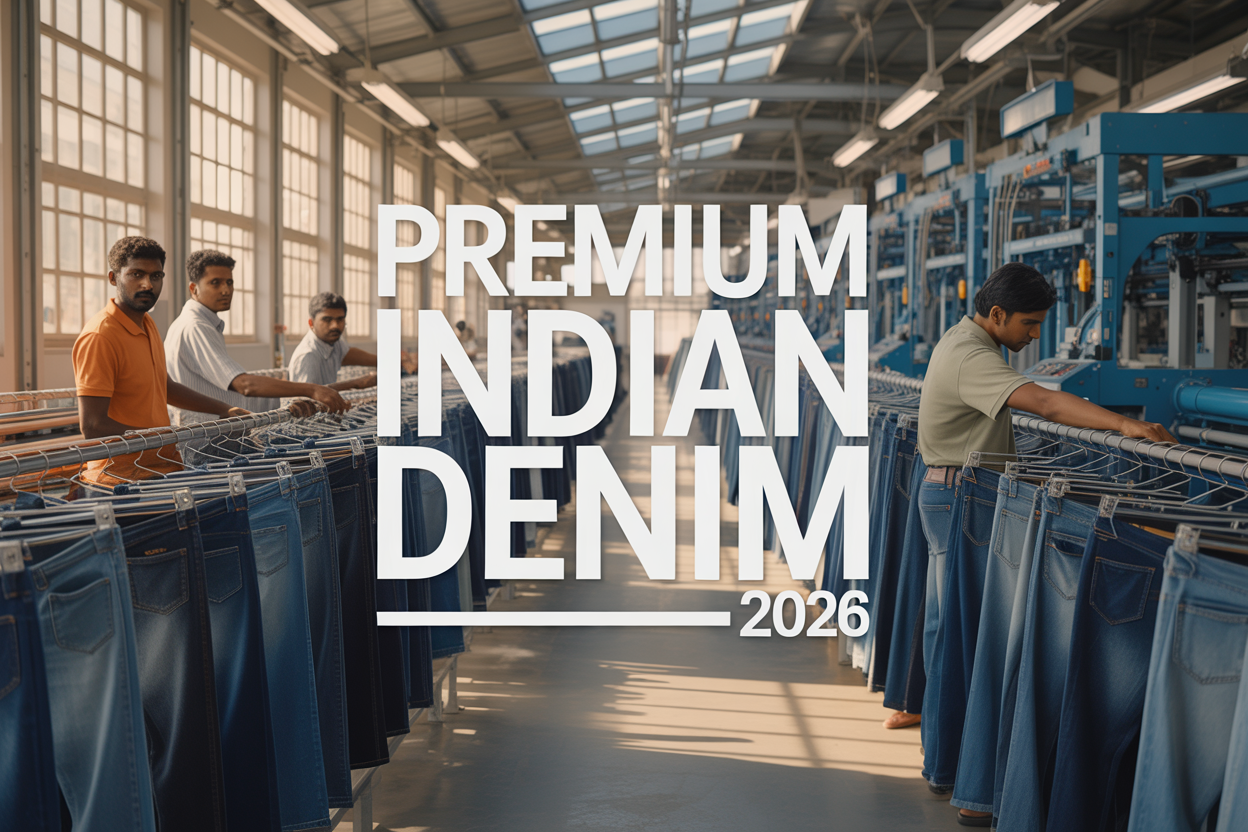
Global fashion brands and retailers are turning their attention to premium denim jeans India offers as the country emerges as a dominant force in 2026’s competitive textile landscape. This guide is designed for sourcing managers, fashion buyers, and business executives who need to understand why India has become the go-to destination for high-quality denim production.
Indian textile industry advantages go far beyond just competitive pricing. The country has built a reputation for delivering exceptional quality while maintaining cost-effectiveness that other manufacturing hubs struggle to match. Smart buyers are discovering that denim manufacturing India 2026 brings together the perfect storm of skilled craftsmanship, advanced technology, and sustainable practices.
We’ll explore how India’s cost-effective denim sourcing gives brands significant margin advantages without compromising on quality. You’ll also learn about the country’s impressive sustainable denim production India initiatives that help brands meet their environmental commitments. Finally, we’ll break down the strategic supply chain benefits that make Indian denim suppliers reliable partners for long-term business relationships.
Cost Advantages of Indian Denim Manufacturing
Lower Labor Costs Compared to Traditional Denim Producers
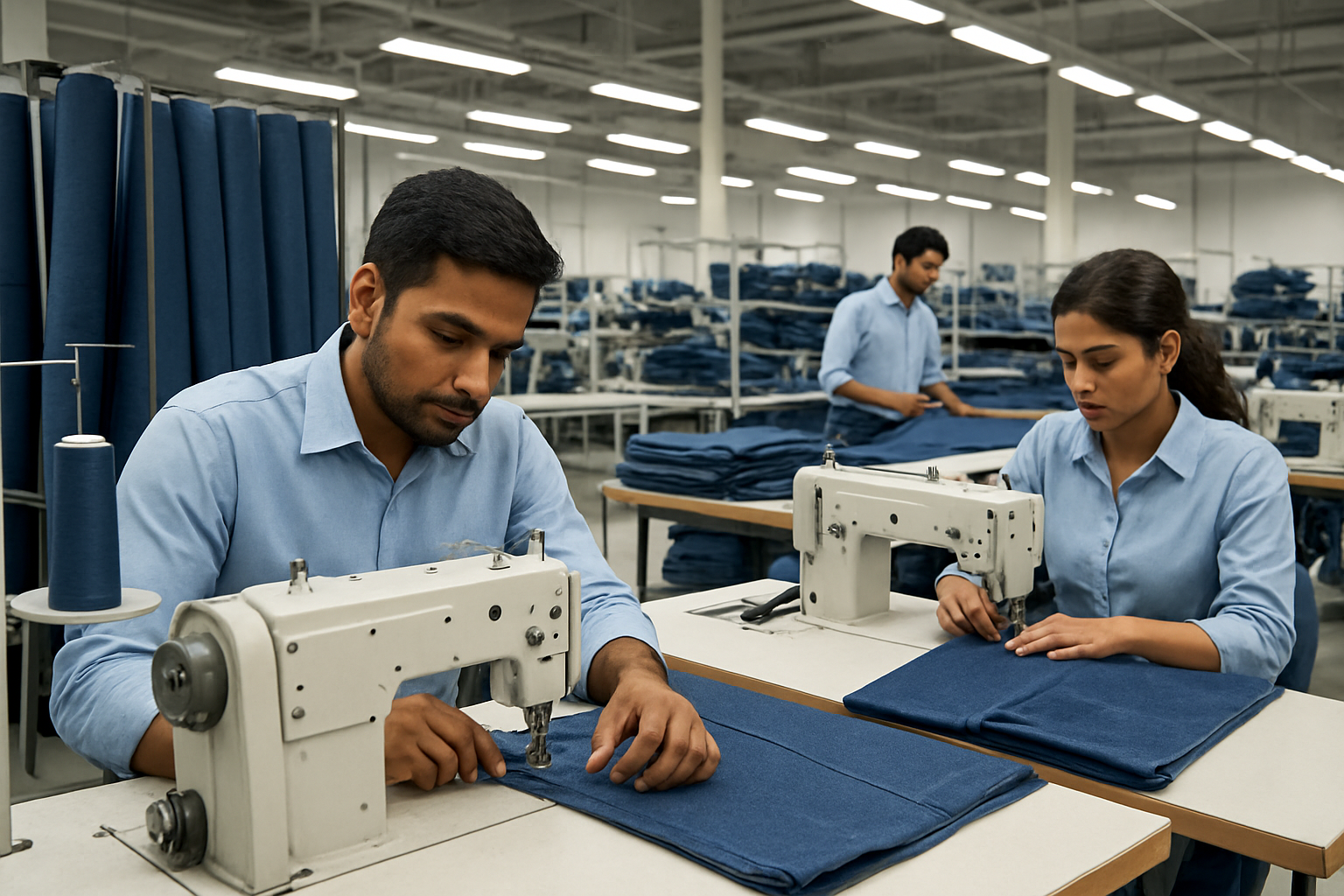
India’s denim manufacturing industry offers significant labor cost advantages that make premium denim jeans India an attractive proposition for global buyers. The skilled workforce in Indian textile hubs like Gujarat, Karnataka, and Tamil Nadu commands wages that are 60-70% lower than those in traditional denim powerhouses like Turkey, Mexico, or Eastern European countries.
This cost differential doesn’t mean compromising on expertise. Indian textile workers have generations of experience in fabric manufacturing, and many facilities invest heavily in training programs to maintain international quality standards. The combination of skilled craftsmanship and competitive wages creates an ideal environment for cost-effective denim sourcing that appeals to brands looking to optimize their production budgets without sacrificing quality.
Reduced Raw Material Expenses Through Local Cotton Sourcing
India’s position as the world’s largest cotton producer gives denim manufacturing India 2026 a distinct advantage in raw material costs. Local cotton sourcing eliminates the need for expensive imports and reduces transportation expenses significantly. The country produces high-quality cotton varieties, including premium organic cotton, which serves as the foundation for superior denim products.
The integrated supply chain from cotton farms to spinning mills to denim weaving facilities creates cost efficiencies that international competitors struggle to match. This vertical integration allows Indian denim suppliers to control quality at every stage while maintaining competitive pricing structures that benefit international buyers.
Competitive Pricing Without Compromising Quality Standards
The competitive advantage of quality denim manufacturing India lies in the ability to deliver premium products at price points that traditional manufacturers cannot match. Indian facilities have invested in state-of-the-art machinery and technology that rivals any global competitor, yet the overall cost structure remains favorable due to operational efficiencies.
Many Indian manufacturers have achieved international certifications like OEKO-TEX, GOTS, and BCI, proving that competitive pricing doesn’t mean cutting corners on quality. The focus on continuous improvement and lean manufacturing practices has enabled these facilities to optimize their operations while maintaining strict quality controls.
Favorable Currency Exchange Rates for International Buyers
The Indian rupee’s exchange rate dynamics provide additional cost benefits for international buyers sourcing premium denim jeans India. Currency fluctuations often work in favor of foreign buyers, particularly those paying in USD, EUR, or GBP. This exchange rate advantage can result in cost savings of 10-15% compared to sourcing from countries with stronger currencies.
Smart buyers time their orders and payments to maximize these currency benefits, making Indian denim manufacturing an even more attractive option for cost-conscious brands seeking to improve their profit margins while maintaining product quality.
Superior Quality and Craftsmanship Standards
Advanced Textile Manufacturing Technologies and Processes
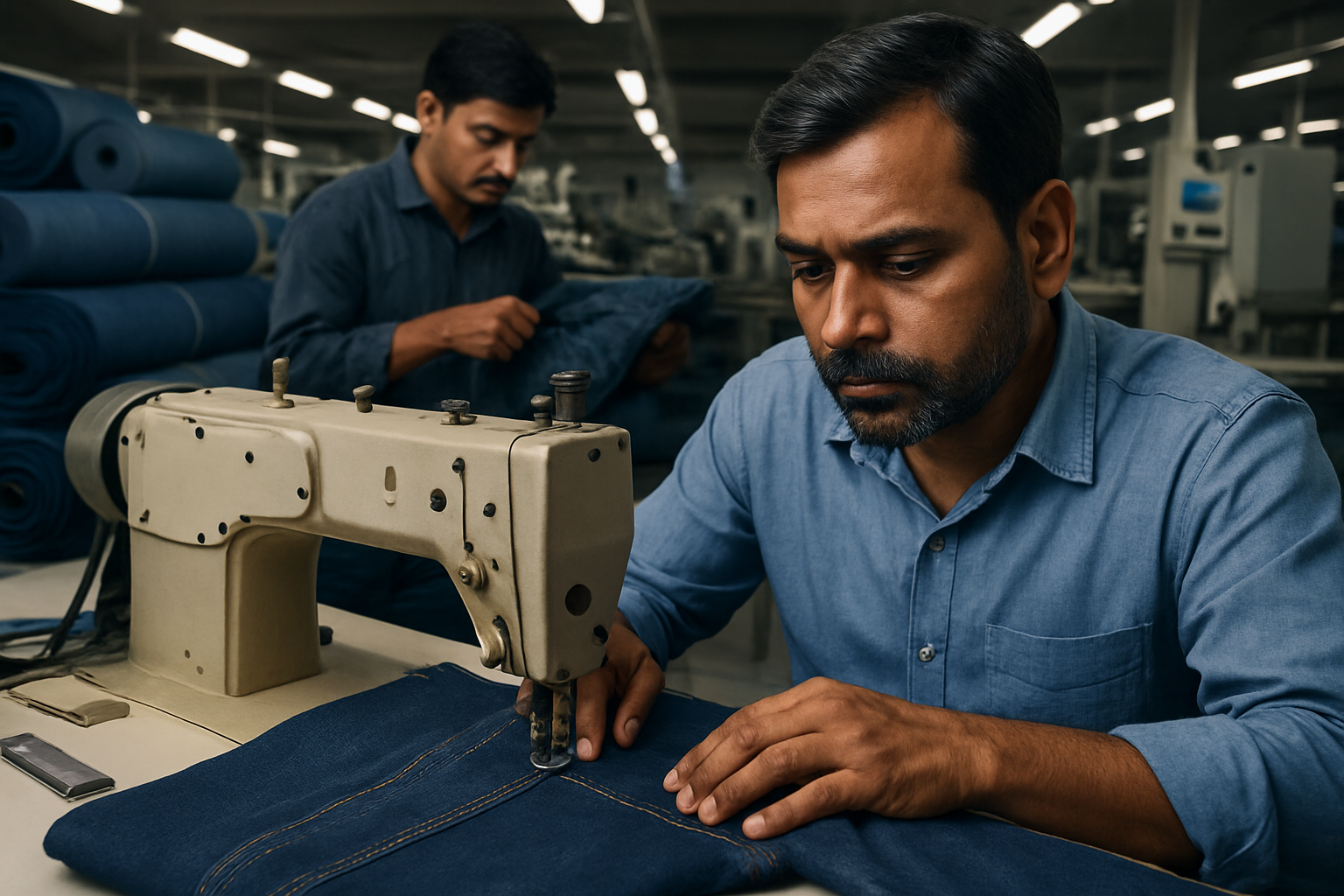
Indian denim manufacturing has embraced cutting-edge technology that rivals global leaders in quality denim manufacturing India. State-of-the-art ring spinning machines produce finer, stronger yarns with superior tensile strength compared to traditional open-end spinning methods. Modern rope dyeing systems achieve consistent indigo penetration while maintaining the authentic vintage fade characteristics buyers demand.
The integration of automated weaving systems ensures precise fabric construction with minimal defects. Computer-controlled looms maintain consistent tension and pick density, resulting in premium denim jeans India manufacturers can confidently export worldwide. Advanced finishing technologies, including laser distressing and ozone washing, create authentic vintage effects without compromising fabric integrity.
Indian mills have invested heavily in Italian and German machinery, bringing European precision to cost-effective production. These investments in technology directly translate to superior fabric hand-feel, improved dimensional stability, and enhanced durability that international buyers specifically seek when sourcing from India.
Skilled Artisan Workforce with Generations of Textile Expertise
India’s textile heritage spans centuries, creating a workforce with deep-rooted craftsmanship knowledge passed down through generations. This expertise becomes particularly valuable in premium denim production, where subtle differences in technique dramatically impact final product quality.
Artisan skills shine in critical areas like pattern matching, where experienced tailors ensure perfect alignment of fading patterns across seams. Hand-finishing techniques, from subtle distressing to intricate embroidery work, showcase the precision only skilled craftspeople can deliver. Many workers come from textile families, bringing intuitive understanding of fabric behavior that machines cannot replicate.
Training programs continuously upgrade traditional skills with modern techniques. Workers learn advanced quality assessment methods, understanding how slight variations in stitching tension or seam construction affect garment longevity. This combination of inherited expertise and contemporary training creates a workforce uniquely positioned to produce premium denim that meets international standards while maintaining authentic craftsmanship details.
The apprenticeship tradition ensures knowledge transfer remains strong, with master craftspeople mentoring newcomers in both technical skills and quality consciousness that premium denim jeans India producers require.
Stringent Quality Control Measures and International Certifications
Indian denim manufacturers have implemented comprehensive quality management systems that exceed international benchmarks. ISO 9001:2015 certification has become standard, with many facilities also achieving WRAP (Worldwide Responsible Apparel Production) and BSCI (Business Social Compliance Initiative) certifications.
Multi-stage inspection processes begin with raw material assessment, where cotton quality, yarn strength, and dye consistency undergo rigorous testing. In-process monitoring includes fabric weight verification, shrinkage testing, and colorfastness evaluation using internationally recognized test methods like AATCC and ISO standards.
Final garment inspection follows AQL (Acceptable Quality Limit) standards with defect classification systems that catch even minor imperfections. Advanced testing equipment measures everything from seam strength to button pull force, ensuring each piece meets specification requirements.
| Quality Metric | Testing Standard | Indian Industry Average |
|---|---|---|
| Seam Strength | ASTM D1683 | 85+ lbs |
| Colorfastness | ISO 105-C06 | Grade 4-5 |
| Dimensional Stability | AATCC 135 | <3% shrinkage |
| Fabric Weight Tolerance | Internal Standards | ±3% variation |
Third-party audits from internationally recognized bodies like SGS and Bureau Veritas provide additional validation. These certifications give buyers confidence that quality denim manufacturing India facilities can consistently deliver products meeting global retail standards while maintaining competitive pricing advantages.
Sustainable Manufacturing Practices and Environmental Benefits
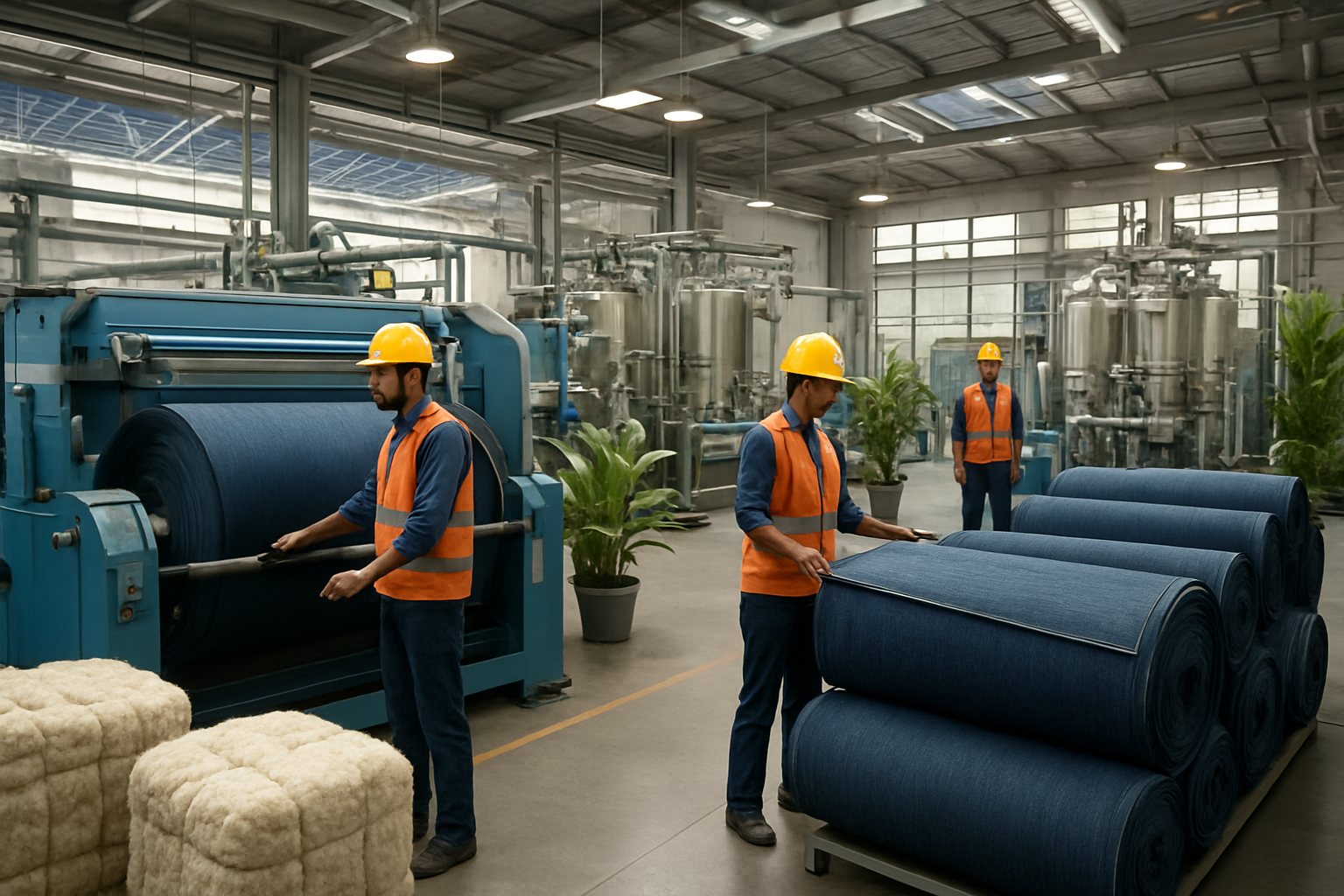
Eco-friendly dyeing processes and water conservation techniques
Indian denim manufacturers are revolutionizing their approach to fabric dyeing through cutting-edge water conservation technologies. Many facilities now use closed-loop water systems that recycle and purify water up to 90%, dramatically reducing freshwater consumption. Advanced ozone washing techniques have replaced traditional stone washing, cutting water usage by 60% while achieving the same vintage effects buyers demand.
The adoption of digital printing and laser technology for creating distressed looks eliminates the need for harmful chemicals traditionally used in acid washing. These innovations allow sustainable denim production India facilities to create premium finishes while meeting strict environmental standards that global brands require.
Organic cotton cultivation and sustainable farming practices
India’s transition to organic cotton farming has positioned the country as a leader in eco-friendly denim production. Farmers are implementing crop rotation systems and natural pest management techniques that eliminate synthetic pesticides and fertilizers. This shift has resulted in healthier soil, improved biodiversity, and cotton that meets international organic certification standards.
The Better Cotton Initiative (BCI) has gained significant traction among Indian denim suppliers, with over 40% of cotton farms participating in sustainable farming programs. These practices reduce water consumption by 30% compared to conventional farming methods while producing superior quality cotton fibers.
Reduced carbon footprint through efficient production methods
Modern denim manufacturing India 2026 facilities are implementing energy-efficient machinery and renewable energy sources to minimize their environmental impact. Solar panel installations and biogas generation from organic waste have reduced electricity consumption from traditional grid sources by up to 50% in leading manufacturing units.
Streamlined production processes eliminate unnecessary steps in the manufacturing chain, reducing both energy consumption and production time. Smart factory automation optimizes machine operations, ensuring minimal waste generation and maximum resource efficiency throughout the production cycle.
Compliance with global environmental regulations and standards
Indian textile industry advantages include robust compliance frameworks that exceed international environmental standards. Manufacturing facilities maintain certifications from OEKO-TEX, GOTS (Global Organic Textile Standard), and Cradle to Cradle programs, ensuring their products meet the strictest global environmental criteria.
Regular third-party audits and transparent reporting systems provide buyers with detailed environmental impact assessments. This commitment to regulatory compliance has made Indian manufacturers preferred partners for brands prioritizing sustainability in their supply chains.
Waste reduction and recycling initiatives
Progressive waste management systems have transformed how premium denim jeans India manufacturers handle production byproducts. Cotton waste from cutting processes is converted into recycled fiber, while fabric scraps are transformed into industrial wiping cloths or insulation materials.
Chemical recovery systems capture and purify dyes and finishing agents for reuse, reducing raw material costs while minimizing environmental discharge. Many facilities have achieved zero liquid discharge status, treating and recycling 100% of process water within their manufacturing operations.
Strategic Supply Chain and Infrastructure Advantages
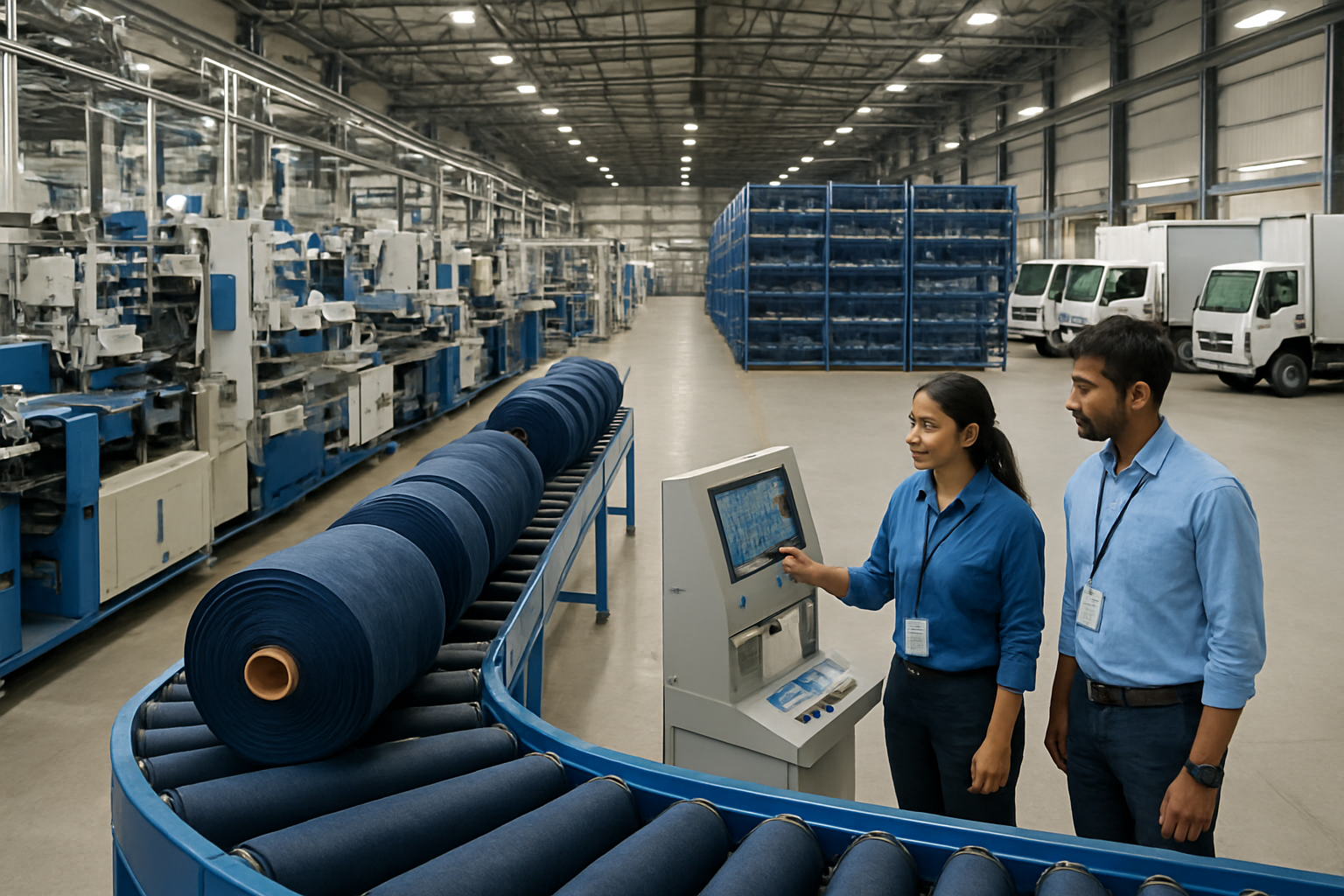
Well-established textile manufacturing hubs and industrial clusters
India’s denim manufacturing prowess stems from strategically located textile hubs that have evolved over decades. Tamil Nadu, Gujarat, Karnataka, and Punjab house world-class denim manufacturing India 2026 facilities, each specializing in different aspects of premium denim production. These clusters benefit from shared infrastructure, skilled labor pools, and supplier networks that create economies of scale impossible to replicate elsewhere.
Tirupur in Tamil Nadu stands out as a global textile powerhouse, processing over 1.5 billion garments annually. The region’s specialized focus on knit and denim products has attracted international brands seeking premium denim jeans India sourcing partners. Similarly, Ahmedabad’s textile cluster combines traditional craftsmanship with modern technology, making it a preferred destination for buyers prioritizing quality and innovation.
These manufacturing hubs operate with integrated supply chains where spinning, weaving, dyeing, and garment manufacturing happen within close proximity. This clustering reduces lead times, minimizes transportation costs, and ensures better quality control throughout the production process.
Efficient logistics networks and shipping connectivity
India’s strategic geographic position provides unparalleled access to global markets through major ports like Mumbai, Chennai, and Kandla. The denim supply chain India benefits from robust maritime connections, with direct shipping routes to North America, Europe, and Asia-Pacific regions. Container turnaround times have improved significantly, with average port-to-destination delivery reduced by 15-20% compared to other Asian manufacturing hubs.
The Dedicated Freight Corridor project has revolutionized inland transportation, connecting major textile manufacturing centers to ports through high-speed rail networks. This infrastructure upgrade has cut domestic logistics costs and improved delivery reliability for Indian denim suppliers working with international buyers.
Multi-modal transportation options, including air cargo facilities at major textile hubs, enable flexible shipping solutions for urgent orders and high-value premium denim products.
Reliable production timelines and scalable manufacturing capacity
Indian textile industry advantages include remarkable scalability and production flexibility that adapts to varying order volumes. Large-scale manufacturers can handle orders ranging from 50,000 to 5 million pieces while maintaining consistent quality standards. This scalability comes from modular production systems and extensive subcontracting networks that activate during peak demand periods.
Production timelines have become increasingly predictable due to advanced planning software and lean manufacturing practices. Most quality denim manufacturing India facilities now offer 45-60 day production cycles for standard orders, with express capabilities for urgent requirements.
The industry’s capacity utilization averages 75-80%, leaving room for accommodating sudden order increases without compromising delivery schedules. This buffer capacity proves invaluable for international buyers dealing with fluctuating market demands.
Strong government support for textile exports
The Indian government’s Production Linked Incentive (PLI) scheme for textiles has allocated ₹10,683 crores to boost manufacturing competitiveness. This support directly benefits denim manufacturing India 2026 initiatives through technology upgrades, skill development programs, and export incentives.
Export promotion policies include duty drawback schemes, advance licensing for raw material imports, and special economic zones offering tax benefits. The Textile Export Promotion Council provides market intelligence, buyer-seller meets, and trade facilitation services that connect Indian manufacturers with global brands.
Recent policy initiatives focus on sustainable manufacturing practices, offering additional incentives for eco-friendly denim production facilities that meet international environmental standards. These government-backed programs position India as a reliable, long-term sourcing destination for premium denim products.
Innovation and Design Capabilities
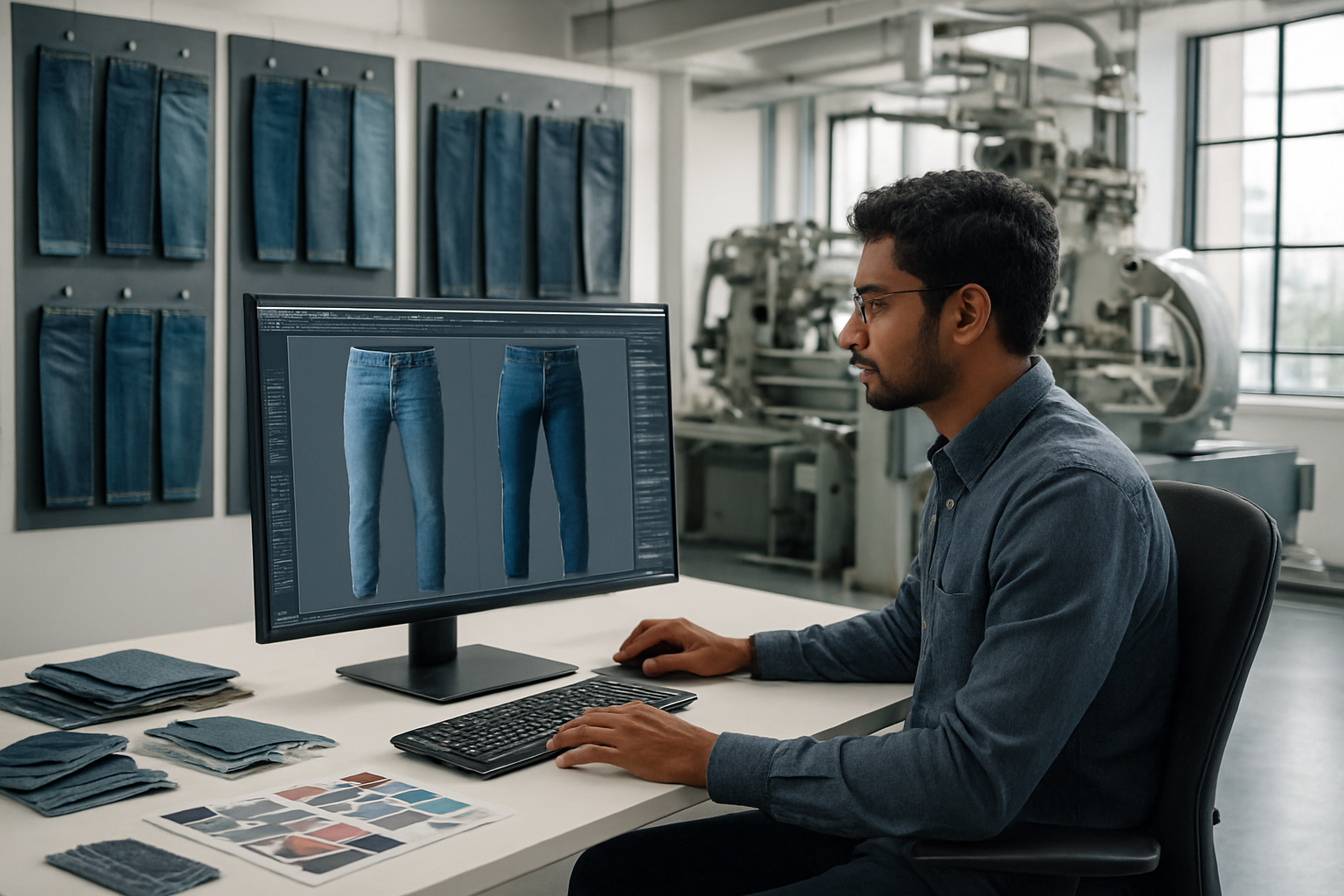
Cutting-edge research and development in denim technology
Indian denim manufacturing India 2026 facilities have transformed into innovation powerhouses, pioneering breakthrough technologies that reshape the global denim landscape. Leading manufacturers invest heavily in R&D centers equipped with advanced fiber engineering labs, digital dyeing systems, and smart textile development units. These facilities focus on developing revolutionary stretch technologies, moisture-wicking properties, and temperature-regulating fabrics that respond to environmental changes.
The country’s textile research institutes collaborate closely with manufacturers to create next-generation denim solutions. Recent innovations include self-healing fibers that repair minor tears, antimicrobial treatments that eliminate odors naturally, and color-changing fabrics activated by UV exposure. Indian denim suppliers leverage nanotechnology to embed functional properties directly into yarn structures, creating jeans with enhanced durability and performance characteristics.
Smart denim represents another frontier where Indian manufacturers excel. Integration of conductive threads enables touch-sensitive panels, wireless charging capabilities, and health monitoring sensors woven seamlessly into fabric construction. These technological advances position premium denim jeans India as the preferred choice for tech-savvy consumers seeking functionality without compromising style.
Customization options for unique fabric treatments and finishes
Indian manufacturers offer unparalleled customization capabilities that cater to diverse brand requirements and consumer preferences. Advanced digital printing systems enable precise pattern application, gradient effects, and photorealistic imagery on denim surfaces. Laser engraving technology creates intricate designs, distressed patterns, and personalized motifs with millimeter precision while reducing water consumption by 80% compared to traditional methods.
Quality denim manufacturing India facilities specialize in innovative finishing techniques including:
-
Enzyme-based treatments for ultra-soft textures and natural aging effects
-
Ozone washing that delivers vintage looks without harsh chemicals
-
Plasma technology for enhanced dye penetration and color fastness
-
3D wrinkle mapping for authentic wear patterns
-
Bio-polishing using natural enzymes for surface smoothness
Color customization reaches new heights through proprietary dyeing processes that achieve unique shades previously impossible with conventional methods. Manufacturers develop exclusive color palettes for individual brands, ensuring market differentiation and brand identity preservation. Temperature-responsive dyes create interactive garments that shift colors based on body heat, adding an element of personalization.
Collaborative design partnerships with international brands
Indian textile industry advantages shine brightest through strategic partnerships with global fashion houses and premium denim brands. Leading manufacturers establish dedicated design studios staffed with international talent, creating cross-cultural creative environments that blend traditional Indian craftsmanship with contemporary global aesthetics.
Major international brands maintain permanent design teams within Indian facilities, enabling real-time collaboration and rapid prototype development. These partnerships accelerate innovation cycles from concept to production, reducing lead times by 40% while maintaining exceptional quality standards. Brand-specific research projects focus on developing signature fabrics, exclusive treatments, and proprietary construction techniques that differentiate products in competitive markets.
Sustainable denim production India initiatives drive collaborative efforts toward eco-friendly innovations. Joint ventures with European and American brands result in breakthrough developments like water-free dyeing processes, organic cotton blends, and recycled polyester integration. These partnerships establish India as the global hub for sustainable premium denim innovation.
Co-creation programs invite international designers to work alongside Indian artisans, combining traditional handcrafting techniques with modern manufacturing processes. This fusion creates unique products that tell authentic stories while meeting contemporary performance requirements.
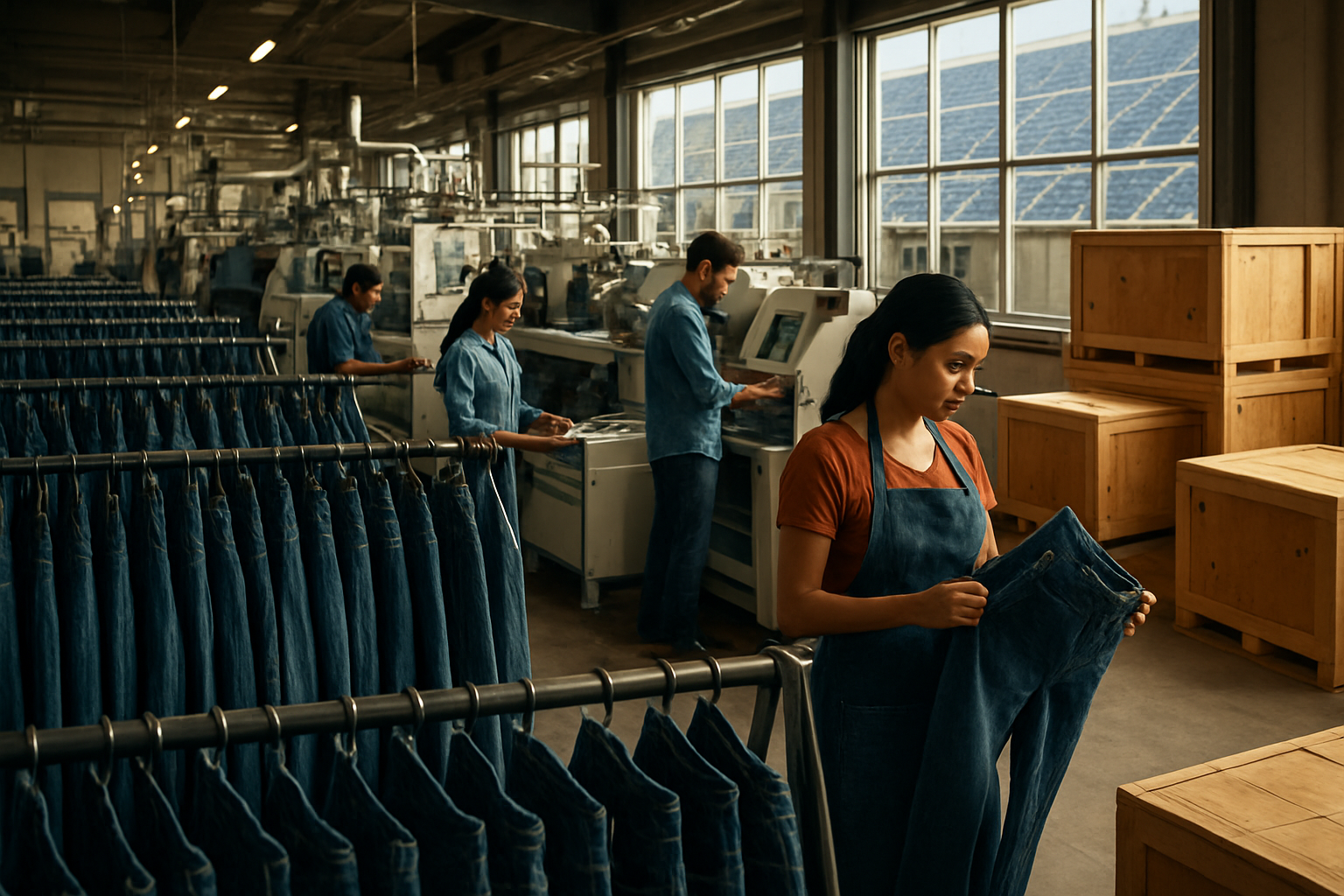
India has become the go-to destination for premium denim because it offers the perfect mix of affordability and excellence. The country’s manufacturers deliver top-notch quality at competitive prices while staying ahead of the curve with sustainable practices and cutting-edge designs. With robust infrastructure and skilled craftspeople who understand global trends, Indian denim producers give buyers everything they need to succeed in today’s market.
If you’re looking to source premium denim that meets both your budget and quality standards, India should be at the top of your list. The combination of cost savings, environmental responsibility, and innovative design capabilities makes it a smart choice for brands wanting to stay competitive. Partner with Indian manufacturers and you’ll get access to world-class denim production that can help your business thrive in 2026 and beyond.