

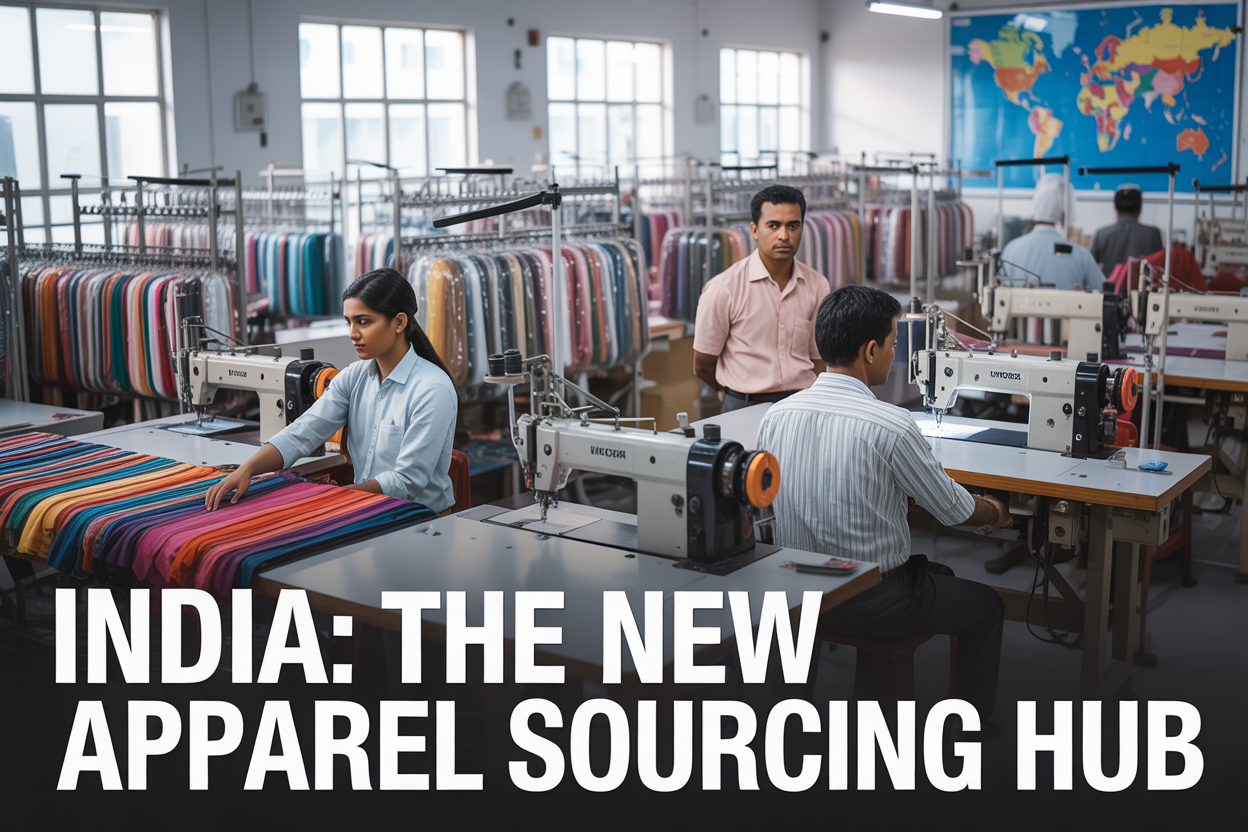
Why India Is Becoming the New Sourcing Hub for Apparel
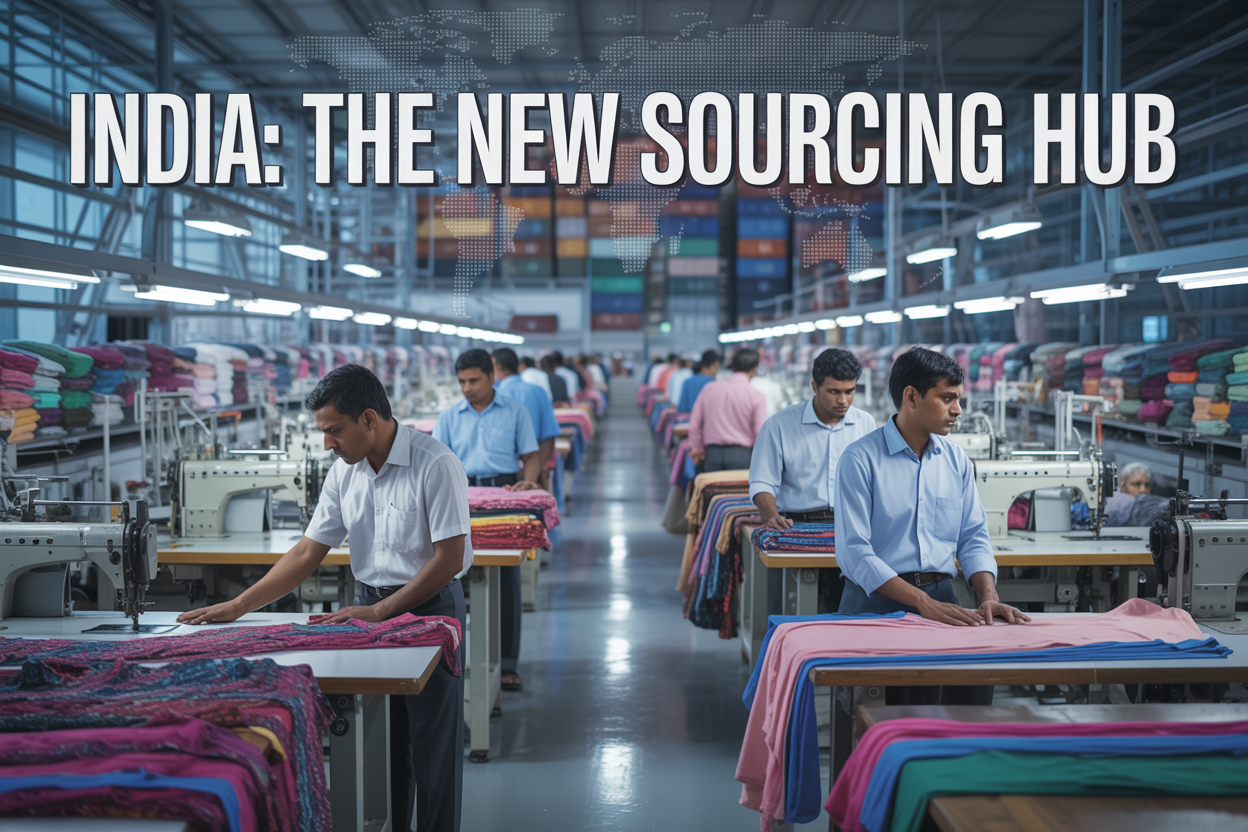
India is rapidly becoming the go-to destination for global apparel brands looking to diversify their supply chains and reduce production costs. This shift represents one of the biggest changes in textile manufacturing India has seen in decades, with major fashion retailers now viewing the country as their primary apparel sourcing destination.
Fashion buyers, procurement managers, and industry executives need to understand why India’s garment production hub status is attracting billions in new investments. The Indian textile industry has transformed from a domestic-focused sector into a world-class manufacturing powerhouse that rivals traditional sourcing locations.
We’ll explore how India’s cost advantages are reshaping global sourcing strategies and examine the manufacturing infrastructure that enables large-scale apparel production. You’ll also discover why the country’s skilled workforce and strategic location make it an ideal clothing production base for reaching both Eastern and Western markets.
Cost Advantages Drive Global Brands to India

Labor costs significantly lower than China and Vietnam
The most compelling reason why global fashion brands are shifting their focus to India lies in the dramatic labor cost advantages. With average hourly wages for garment workers ranging from $0.68 to $1.20, India offers manufacturing costs that are 40-50% lower than China and 25-30% lower than Vietnam. This cost differential becomes even more significant when considering skilled labor categories, where India maintains competitive rates while delivering comparable quality standards.
Major brands like H&M, Zara, and Uniqlo have already capitalized on these savings, with some reporting production cost reductions of up to 35% after switching operations from China to India. The wage gap becomes particularly pronounced in states like Tamil Nadu, Karnataka, and Andhra Pradesh, where established textile manufacturing India clusters offer both competitive labor rates and experienced workers.
Competitive raw material pricing through local textile mills
India’s position as the world’s second-largest cotton producer creates a natural advantage for apparel sourcing destination strategies. Local textile mills provide direct access to raw materials at prices that are typically 15-20% lower than imported alternatives. This vertical integration within the Indian textile industry eliminates multiple intermediaries and reduces procurement lead times significantly.
The country’s extensive network of spinning mills, weaving units, and processing facilities means that brands can source everything from basic cotton fabrics to premium blends without international shipping costs. States like Gujarat and Maharashtra house some of Asia’s most advanced textile mills, offering competitive pricing on synthetic fibers, cotton blends, and specialty fabrics that rival Chinese and Vietnamese suppliers.
Reduced transportation costs for regional markets
Geographic positioning gives India a substantial edge in serving both Western and emerging markets cost-effectively. Shipping costs to Europe are approximately 20% lower compared to Southeast Asian alternatives, while access to Middle Eastern and African markets offers even greater savings. The development of dedicated textile parks near major ports like Chennai, Mumbai, and Kochi has streamlined logistics operations.
For brands targeting the growing South Asian consumer base, local production eliminates international shipping entirely. This proximity advantage becomes crucial for fast-fashion retailers requiring quick inventory turnaround and reduced supply chain complexity.
Government subsidies and tax incentives for exporters
India’s policy framework actively supports garment manufacturing advantages India through comprehensive incentive packages. The Merchandise Exports from India Scheme (MEIS) provides duty credits of 2-4% on garment exports, while the Export Promotion Capital Goods (EPCG) scheme allows duty-free imports of manufacturing equipment.
Special Economic Zones (SEZs) offer additional benefits including 100% income tax exemption for the first five years and 50% for the next five years. The Production Linked Incentive (PLI) scheme specifically targets textile hub Asia development with ₹10,683 crores allocated for textile manufacturing, providing 11-15% incentives on incremental turnover for qualifying companies.
Manufacturing Infrastructure Supports Large-Scale Production

Advanced Textile Machinery and Modern Production Facilities
India’s textile manufacturing infrastructure has undergone massive transformation over the past decade. State-of-the-art production facilities equipped with cutting-edge machinery now dot the manufacturing landscape from Tamil Nadu to Gujarat. These modern plants feature automated spinning systems, computer-controlled looms, and digital printing technologies that rival facilities anywhere in the world.
Major industrial clusters in Tirupur, Bangalore, and Gurgaon house production units capable of handling orders from global fashion brands with millions of pieces. Ring spinning frames with speeds exceeding 25,000 rpm and shuttleless looms operating at 1,200 picks per minute showcase the technological advancement in India’s apparel sourcing capabilities.
The infrastructure investment extends beyond machinery to include specialized facilities for different garment categories. Knitwear manufacturing centers feature circular knitting machines and flat-bed knitting systems, while woven garment facilities incorporate rapier looms and air-jet looms for diverse fabric production.
Integrated Supply Chain from Fiber to Finished Garments
India’s textile manufacturing strength lies in its complete vertical integration. The country produces cotton, silk, and synthetic fibers domestically, creating a seamless flow from raw materials to finished products. This integration reduces lead times and costs significantly compared to sourcing from multiple countries.
Cotton-growing regions in Maharashtra and Gujarat supply raw materials directly to spinning mills, which then feed yarn to weaving and knitting units. The proximity of these operations creates an efficient textile hub that supports large-scale garment production.
Synthetic fiber production facilities from companies like Reliance Industries provide polyester and other man-made fibers, reducing dependence on imports. This domestic fiber capacity ensures consistent supply and competitive pricing for apparel manufacturers targeting both domestic and export markets.
Processing units for dyeing, printing, and finishing are strategically located near manufacturing clusters, creating industrial ecosystems that streamline the apparel supply chain. These integrated operations enable manufacturers to offer complete solutions to international brands seeking reliable sourcing partners.
Established Quality Control Systems Meeting International Standards
Quality assurance infrastructure in India’s garment manufacturing sector matches international benchmarks. Testing laboratories accredited by bodies like NABL and equipped with advanced instruments ensure products meet global standards for color fastness, dimensional stability, and fabric performance.
Manufacturing facilities regularly obtain certifications including ISO 9001, OEKO-TEX Standard 100, and GOTS (Global Organic Textile Standard). These certifications demonstrate compliance with environmental and social responsibility requirements that major brands demand from their sourcing partners.
Third-party inspection services operate throughout major production centers, providing independent quality verification. Companies like SGS, Bureau Veritas, and Intertek maintain extensive networks across Indian textile manufacturing hubs, offering pre-production, in-line, and final inspections.
Quality management systems incorporate statistical process control and lean manufacturing principles to minimize defects and waste. Many facilities employ six-sigma methodologies and continuous improvement programs that consistently deliver products meeting the exacting standards of international fashion retailers and brands.
Skilled Workforce Powers Quality Apparel Production

Generations of textile expertise and traditional craftsmanship
India’s textile heritage spans over 5,000 years, creating a deeply embedded knowledge base that modern India apparel sourcing companies tap into daily. Families in regions like Gujarat, Tamil Nadu, and West Bengal have passed down weaving, dyeing, and embroidery techniques through countless generations. This isn’t just historical trivia – it translates into workers who instinctively understand fabric behavior, thread tensions, and quality standards that machines can’t replicate.
Villages across India still practice traditional techniques like block printing, hand embroidery, and natural dyeing methods. When global brands source from India, they’re not just getting factory workers – they’re accessing artisans who learned these skills from childhood. This craftsmanship foundation gives Indian manufacturers a competitive edge in producing intricate designs and premium quality garments that require human touch and expertise.
Technical training programs producing specialized workers
The Indian textile industry has invested heavily in technical education infrastructure. Institutions like the National Institute of Fashion Technology (NIFT) and textile engineering colleges across the country produce thousands of skilled professionals annually. These programs combine traditional knowledge with modern manufacturing techniques, creating a workforce that understands both heritage crafts and contemporary production methods.
State governments have partnered with industry leaders to establish skill development centers specifically for garment manufacturing advantages India can leverage. These centers offer specialized training in areas like pattern making, quality control, machine operation, and production planning. Workers emerge from these programs with internationally recognized certifications that meet global sourcing standards.
Private companies have also created in-house training programs. Major manufacturers invest in continuous skill development, ensuring their workforce stays current with evolving fashion trends, sustainability practices, and technical innovations. This commitment to education creates a self-reinforcing cycle where skilled workers attract more international business, which funds more training programs.
English-speaking management facilitating global communication
India’s colonial history left the country with a significant English-speaking population, particularly in management roles within the textile manufacturing India sector. This linguistic advantage eliminates communication barriers that often complicate international sourcing relationships. Design specifications, quality requirements, and production timelines get communicated clearly without translation errors that can derail projects.
Middle and senior management positions in Indian textile companies are typically filled by professionals who can communicate effectively with international buyers. They understand global fashion terminology, business practices, and cultural nuances that smooth negotiations and ongoing relationships. This communication capability extends beyond just language – Indian managers often have experience working with Western brands and understand their expectations and working styles.
Video conferences, technical discussions, and problem-solving sessions happen seamlessly between Indian manufacturers and international brands. This real-time communication capability allows for rapid response to design changes, urgent orders, and quality concerns that would be difficult to manage with language barriers.
Large labor pool ensuring production scalability
India’s massive population provides an enormous labor pool for apparel sourcing destination requirements. The country has over 45 million people working in textile and apparel manufacturing, with the potential to scale up production quickly when demand increases. This scalability is crucial for global brands that need to respond rapidly to fashion trends or seasonal demands.
Different regions specialize in different aspects of production, creating flexibility for manufacturers to scale operations across multiple locations. Tamil Nadu excels in spinning and knitting, Gujarat leads in weaving and processing, while Karnataka focuses on silk production. This geographic distribution allows for risk mitigation and capacity expansion without being limited to a single location.
The demographic advantage continues as India has a young population with many people entering the workforce annually. Rural-to-urban migration provides a steady stream of workers willing to learn textile manufacturing skills, ensuring that labor shortages don’t constrain production capacity as they might in countries with aging populations.
Strategic Location Offers Global Market Access

Proximity to Key Consumer Markets in Asia and Middle East
India’s geographic position places it at the center of some of the world’s fastest-growing consumer markets. The country sits just hours away from major Asian economies like China, Japan, and Southeast Asian nations, where demand for affordable yet quality apparel continues to surge. This proximity translates into significant cost savings and faster delivery times compared to sourcing from distant manufacturing hubs.
The Middle East represents another crucial advantage for India apparel sourcing. Countries like UAE, Saudi Arabia, and Qatar have become major retail destinations, and India’s textile manufacturers can reach these markets within days rather than weeks. This geographical sweet spot allows Indian suppliers to respond quickly to fashion trends and seasonal demands, giving global brands the agility they need in today’s fast-moving retail environment.
Air freight costs from India to these key markets remain competitive, while sea freight options provide economical solutions for bulk shipments. Major international brands have recognized this advantage, with many establishing dedicated sourcing offices in Mumbai, Delhi, and Bangalore to better coordinate with local manufacturers and leverage India’s strategic location.
Major Shipping Ports Enabling Efficient Export Logistics
India’s extensive coastline hosts some of Asia’s most efficient shipping ports, making it a powerhouse for clothing production costs India optimization. The Jawaharlal Nehru Port in Mumbai handles the lion’s share of India’s textile exports, processing millions of containers annually with world-class facilities and technology.
Chennai Port serves as the gateway to South India’s major textile manufacturing India clusters, including Tamil Nadu and Karnataka. The port’s deep-water facilities can accommodate large container vessels, reducing per-unit shipping costs for bulk apparel orders. Recent infrastructure upgrades have cut cargo processing times significantly, allowing manufacturers to meet tight delivery schedules.
On the western coast, ports like Kandla and JNPT have invested heavily in specialized textile handling facilities. These ports offer:
-
Dedicated textile storage warehouses with climate control
-
Fast-track customs clearance for apparel exports
-
Direct rail connectivity to major manufacturing centers
-
24/7 operations to accommodate global shipping schedules
The government’s Sagarmala initiative continues expanding port capacity and improving connectivity, positioning India as an even more attractive apparel sourcing destination for international buyers.
Growing Domestic Market Reducing Dependency on Exports
India’s domestic apparel market has exploded into a $59 billion opportunity, fundamentally changing the dynamics of the country’s garment production hub status. With over 1.4 billion consumers and a rapidly expanding middle class, local demand now provides a stable foundation that reduces manufacturers’ reliance on volatile export markets.
E-commerce platforms like Myntra, Flipkart, and Amazon India have created new distribution channels for domestic brands, while international retailers are opening physical stores across tier-1 and tier-2 cities. This dual market approach allows Indian manufacturers to balance their production portfolios between export orders and domestic sales.
The rise in disposable income, particularly among urban millennials and Gen Z consumers, has created demand for both affordable fashion and premium apparel. Indian manufacturers can now test new designs and production techniques on the domestic market before scaling for international exports. This domestic testing ground has improved quality standards and innovation capabilities across the Indian textile industry.
Local consumption also provides a buffer during global economic downturns or trade disputes. When export orders decline, manufacturers can pivot to serving the domestic market, maintaining production levels and employment. This flexibility makes India’s apparel supply chain India more resilient compared to countries heavily dependent on exports alone.
Regional fashion weeks, influencer marketing, and growing fashion consciousness have all contributed to this domestic boom, creating a virtuous cycle that strengthens India’s position as a global sourcing destination.
Government Policies Accelerate Industry Growth

Production Linked Incentive schemes boosting manufacturing
The Indian government’s Production Linked Incentive (PLI) scheme has revolutionized the textile manufacturing India landscape by offering substantial financial rewards to companies that achieve specific production targets. Under this program, manufacturers can receive incentives ranging from 9-11% of their incremental turnover over five years, creating a powerful motivation for scaling up operations. The scheme specifically targets technical textiles and MMF (man-made fiber) segments, areas where India previously lagged behind global competitors.
Major international brands have responded enthusiastically to these incentives. Companies investing in new manufacturing facilities or expanding existing ones can access benefits worth billions of dollars collectively. The scheme covers everything from fiber production to finished garments, ensuring the entire apparel supply chain India benefits from government support. This comprehensive approach has attracted players across the value chain, from yarn manufacturers to export houses.
Textile parks and special economic zones streamlining operations
Dedicated textile parks and Special Economic Zones (SEZs) have transformed how the Indian textile industry operates by creating integrated ecosystems where manufacturers can access everything they need under one roof. These parks typically house spinning mills, weaving units, dyeing facilities, and garment manufacturing plants, dramatically reducing logistics costs and lead times.
The government has established over 60 textile parks across different states, each designed to serve specific market segments. Parks like the Brandix India Apparel City in Andhra Pradesh and the Welspun Park in Gujarat showcase world-class infrastructure with captive power plants, water treatment facilities, and dedicated export terminals. These facilities enable manufacturers to maintain consistent quality standards while meeting tight delivery schedules for international buyers.
SEZs offer additional advantages including duty-free imports of raw materials, simplified regulatory procedures, and tax benefits. Companies operating within these zones can import cotton, synthetic fibers, and machinery without paying customs duties, significantly reducing their input costs. The streamlined approval processes mean new projects can commence operations months faster than traditional setups.
Trade agreements opening new international markets
India’s strategic trade agreements have unlocked access to key apparel sourcing destination markets worldwide. The recent Economic Partnership Agreement with the UAE has eliminated tariffs on textile exports, making Indian products more competitive in Middle Eastern markets. Similarly, ongoing negotiations with the European Union promise to reduce trade barriers that have historically favored competitors.
The Comprehensive Economic Partnership Agreement (CEPA) with South Korea has already shown measurable results, with textile exports to Korea growing by over 40% since implementation. These agreements don’t just reduce tariffs – they also establish mutual recognition of quality standards and testing procedures, reducing compliance costs for exporters.
Free Trade Agreements with ASEAN countries have positioned India as a preferred supplier for the region’s growing middle class. Vietnam, Thailand, and Indonesia now source significant volumes of Indian textiles, taking advantage of preferential duty rates that make Indian products more attractive than Chinese alternatives.
Investment in infrastructure supporting industry expansion
The government’s massive infrastructure investments directly support the garment production hub aspirations of various Indian states. The Dedicated Freight Corridor project has reduced transportation time between manufacturing centers and ports from 2-3 days to just 12-15 hours. This improvement is particularly significant for time-sensitive fashion orders where quick turnaround times determine supplier selection.
Port modernization initiatives have expanded capacity at key textile export terminals. The Jawaharlal Nehru Port Trust in Mumbai now handles over 40% of India’s textile exports through automated container handling systems that reduce dwell times and shipping costs. Similar upgrades at Chennai, Cochin, and Tuticorin ports have created a robust export infrastructure capable of handling projected growth in India clothing exports.
Digital infrastructure investments include fiber optic connectivity reaching industrial areas and textile parks. High-speed internet enables manufacturers to implement Industry 4.0 technologies, real-time quality monitoring, and seamless communication with international buyers. These technological capabilities are essential for competing in today’s data-driven apparel industry.
Labor law reforms improving business flexibility
Recent labor law reforms have addressed long-standing concerns that made India less attractive for large-scale manufacturing compared to countries like Bangladesh and Vietnam. The new labor codes consolidate 29 different labor laws into four comprehensive codes, dramatically simplifying compliance requirements for manufacturers.
The reforms allow greater flexibility in hiring practices, including fixed-term employment contracts that align with the seasonal nature of fashion production. Companies can now adjust their workforce based on order volumes without the complex procedures that previously discouraged capacity expansion. This flexibility is particularly valuable for manufacturers serving fast-fashion brands that require rapid scaling of production.
Simplified procedures for factory inspections and digital filing of compliance reports have reduced administrative burdens. The new system uses risk-based inspection protocols, meaning compliant factories face fewer disruptions while maintaining high safety and working condition standards. These changes have made India more attractive for manufacturers looking to establish or expand operations in the textile hub Asia region.

India’s rise as a major apparel sourcing destination isn’t happening by chance. The combination of competitive manufacturing costs, robust infrastructure, and a skilled workforce creates the perfect storm for global fashion brands looking to optimize their supply chains. Add in the country’s strategic location that connects easily to both Eastern and Western markets, plus government policies that actively support textile manufacturing, and you’ve got a compelling case for why so many companies are making the switch.
For fashion brands still weighing their options, the writing is on the wall. India offers not just immediate cost savings, but a sustainable long-term partnership for growth. The infrastructure is there, the talent is ready, and the government is rolling out the red carpet. Companies that move quickly to establish relationships with Indian manufacturers will likely find themselves ahead of competitors who wait on the sidelines. The question isn’t whether India will become a dominant force in global apparel sourcing—it’s whether your brand will be part of that transformation.